Blog

  • Which Blog Niches Are Hardest (and Easiest) to Get Links From?

    Which Blog Niches Are Hardest (and Easiest) to Get Links From?


    Not all link building campaigns are created equal. The niche you’re operating in — and the niches you’re trying to earn links from — has an enormous impact on how easy or difficult your outreach will be.

    Some niches are flooded with bloggers who happily accept guest posts and collaborations. Others are locked behind editorial gatekeepers, paid placement requests, or a general hostility toward outreach of any kind.

    If you’re planning a link building campaign, understanding the landscape of different blog niches can save you weeks of wasted effort and help you allocate your outreach budget more effectively. Here’s what we’ve learned from analyzing blog databases spanning over 100,000 categorized sites.

    The Easiest Niches for Earning Links

    These niches tend to have large numbers of active blogs, lower barriers to getting published, and a culture of collaboration and content sharing.

    Marketing and SEO

    This might seem obvious — people in marketing understand the value of links and are more receptive to outreach. But it goes deeper than that. The marketing niche has an unusually high density of blogs that accept guest contributions, regularly participate in expert roundups, and actively link out to useful resources.

    The challenge is relevance. If your business isn’t in the marketing space, links from marketing blogs may not carry as much topical authority. But for SEO tools, agencies, and marketing SaaS companies, this is the friendliest niche to build links in.

    Technology and SaaS

    Tech blogs tend to be prolific linkers. Product reviews, comparison posts, “best tools” roundups, and how-to guides naturally include outbound links. Many tech bloggers are also open to guest contributions, especially if you can offer genuine technical expertise.

    The sheer volume of tech blogs means your prospect list will be long, and the competition for placements is manageable outside the very top-tier publications. Startups and SaaS companies in particular benefit from the tech blogging ecosystem’s willingness to cover new tools and solutions.

    Personal Finance and Business

    The personal finance blogging community is massive and well-organized. Many bloggers in this space have been publishing for years, have established editorial calendars, and actively seek quality content to supplement their own output.

    Guest posting works well here, as does creating data-driven resources (calculators, comparison tools, financial benchmarks) that finance bloggers naturally want to link to. The audience overlap between personal finance, entrepreneurship, and small business creates opportunities for cross-niche link building that’s hard to find elsewhere.

    Health and Wellness

    Health and wellness is one of the largest blog niches by volume. From fitness to nutrition to mental health, there are thousands of actively maintained blogs looking for expert content.

    The important caveat: Google holds health content to a higher standard (YMYL — Your Money or Your Life). Blogs in this space tend to be more careful about who they link to, and links from health blogs carry more weight when they come from credible sources. If you can demonstrate genuine expertise — credentials, published research, clinical experience — health bloggers are very receptive.

    Education and Careers

    Educational blogs and career advice sites are naturally inclined to link to useful resources. If your content helps people learn something, advance their career, or develop new skills, this niche is fertile ground for link building.

    Resource pages are particularly common in the education space. Universities, online learning platforms, and educational nonprofits maintain curated link lists that can be excellent targets for outreach — though they often have higher editorial standards.

    The Hardest Niches for Earning Links

    These niches present challenges for different reasons — gatekeeping, commercialization, low blog density, or cultural resistance to outreach.

    Legal

    The legal niche is notoriously difficult for link building. Law firms and legal blogs tend to be conservative about outbound linking, partly due to compliance concerns and partly because the niche has been so heavily targeted by aggressive SEO that many legal bloggers are deeply skeptical of outreach.

    Guest posting opportunities exist but are limited. Most successful link building in the legal space comes from digital PR (creating newsworthy legal analysis or commentary) or earning links from legal directories and bar association sites — which are authoritative but competitive.

    Real Estate

    Real estate blogs are plentiful, but getting links from them is harder than the volume would suggest. Many real estate blogs are thinly maintained lead generation sites rather than genuine content publications. The ones that are legitimate tend to be protective of their outbound links.

    The most effective approach in real estate is creating hyper-local content (neighborhood guides, market data, community resources) that local real estate bloggers find useful enough to reference. National-level link building in real estate is an uphill battle.

    Insurance and Financial Services

    While personal finance blogs are link-friendly, the insurance and institutional financial services niche is the opposite. Compliance requirements, legal review processes, and corporate approval chains mean that even willing editors may take months to process a link request.

    The sites that do link out tend to be extremely selective, which makes each placement more valuable but the overall process much slower.

    News and Journalism

    Getting a journalist at a major publication to link to your content is the holy grail of link building — and also one of the hardest things to do. Journalists are inundated with pitches, and editorial standards at reputable publications are high.

    The only reliable way to earn links from news sites is through digital PR: creating genuinely newsworthy content (original data, surprising findings, expert commentary on breaking news) that journalists need as a source. Standard outreach tactics like guest posting and link insertion requests simply don’t work at major publications.

    YMYL Niches Generally

    Any niche that falls under Google’s “Your Money or Your Life” umbrella — health, finance, legal, safety — has higher linking barriers. Bloggers and webmasters in these spaces are (rightly) more careful about what they link to, because the consequences of linking to bad information are more serious.

    Building links in YMYL niches requires stronger credentials, higher-quality content, and more patience than non-YMYL niches.

    Factors That Determine Niche Difficulty

    Beyond specific niches, several factors influence how hard or easy it is to earn links from any given blog category.

    Blog Density

    Simply put: more blogs means more opportunities. Niches with thousands of active blogs give you a deeper prospect pool and more chances to find willing partners. Niches with a handful of major publications and few independent blogs offer fewer paths in.

    Guest Post Culture

    Some niches have a strong tradition of guest posting. Marketing, technology, and lifestyle blogs regularly feature guest contributors. Other niches — legal, medical, engineering — rarely publish outside voices. Knowing whether guest posting is culturally normal in your target niche shapes your entire outreach strategy.

    Commercialization Level

    The more commercialized a niche, the more likely bloggers are to charge for placements. Niches where bloggers routinely monetize through sponsored content (travel, fashion, food) often expect payment for link placements, which complicates outreach for teams that can’t or won’t pay for links.

    Editorial Gatekeeping

    Niches with professional editorial standards — journalism, academic, medical — have formal review processes that slow down link acquisition. This isn’t necessarily bad (links from editorially gatekept sites tend to be more valuable), but it means your timeline for results needs to be longer.

    Outreach Fatigue

    Niches that have been heavily targeted by link builders develop outreach fatigue. Tech, marketing, and personal finance blogs receive so many pitches that standing out requires significantly more personalization and a stronger value proposition. Niches that are less commonly targeted — niche hobbies, regional blogs, academic subjects — are often more receptive because they receive less outreach overall.

    How to Use This Information

    Understanding niche difficulty helps you set realistic expectations and allocate resources effectively.

    If you’re operating in an easy niche, you can afford to be more aggressive with volume. Build large prospect lists, test multiple pitch angles, and expect a steady stream of placements.

    If you’re in a hard niche, shift your approach toward quality over quantity. Invest more in each prospect relationship, create higher-caliber content assets, and consider digital PR as your primary link building channel.

    If your business doesn’t fit neatly into one niche, look for adjacent niches where link building is easier. A legal tech company might struggle to get links from law firm blogs but find much more success targeting technology and startup blogs. A health supplement brand might do better with fitness and lifestyle bloggers than with medical publications.

    The smartest link building strategies don’t fight the current — they find the niches where the current works in their favor and focus their energy there.

    Building Your Niche-Specific Prospect List

    Whatever niche you’re targeting, the efficiency of your campaign depends on the quality of your prospect data. Knowing which blogs exist in your target niche, how they’re categorized, what their domain authority looks like, and whether they’ve historically accepted guest content or outbound links — all of this information determines whether your outreach hits the right targets or disappears into the void.

    This is where categorized blog databases become invaluable. Rather than spending weeks manually searching for and vetting blogs in each niche, you can filter a pre-built database by category, authority level, and activity to generate a targeted prospect list in minutes. The time saved on prospecting can be redirected toward personalization and relationship building — the things that actually determine whether your outreach gets a response.
  • The State of Blog Outreach Response Rates in 2026

    The State of Blog Outreach Response Rates in 2026


    Anyone who’s run an outreach campaign knows the feeling: you spend hours crafting prospect lists, personalizing emails, and hitting send — only to watch your inbox stay frustratingly quiet.

    Low response rates are the single biggest pain point in link building outreach. But how low is “low”? And more importantly, what separates the campaigns that get responses from the ones that get ignored?

    We analyzed outreach patterns across thousands of campaigns and spoke with link building professionals to put together this snapshot of where blog outreach response rates stand in 2026 — and what’s actually moving the needle.

    The Numbers: What Response Rates Look Like Today

    Let’s start with the benchmarks most outreach teams are seeing.

    Overall cold outreach response rates hover between 5% and 15% for well-executed campaigns. That means for every 100 emails sent, somewhere between 5 and 15 will generate any kind of reply — including “no thanks.”

    Positive response rates (replies that express interest or lead to a placement) are lower, typically in the 3% to 8% range for cold outreach. The rest are polite declines, auto-replies, or requests for payment.

    Follow-up emails significantly improve results. A single follow-up sent 5-7 days after the initial email can boost overall response rates by 40-60%. A second follow-up adds another 10-20%. Beyond two follow-ups, the returns diminish sharply and the risk of being marked as spam increases.

    Warm outreach — contacting people you have an existing relationship with — sees response rates of 30% to 50% or higher. This is why relationship building is consistently cited as the most underrated aspect of link building.

    How Response Rates Vary by Outreach Type

    Not all outreach is created equal. The type of pitch you’re sending dramatically affects how likely you are to get a reply.

    Guest Post Pitches: 8-15% Response Rate

    Guest post pitches remain one of the better-performing outreach types, largely because the value exchange is clear: you provide free content, they get a ready-to-publish article. Blogs that actively accept guest contributions are already primed to say yes — the question is whether your pitch is relevant and your proposed topics are interesting.

    The spread in response rates comes down to targeting. Pitching blogs that have published guest posts recently and cover topics you’re qualified to write about pushes you toward the higher end. Mass-emailing every site with a “write for us” page drops you to the bottom.

    Resource/Link Insertion Requests: 3-8% Response Rate

    Asking a blogger to add your link to an existing post is a harder sell. You’re asking them to edit published content for your benefit, which requires more trust and a clearer value proposition.

    The requests that work tend to be very specific: “Your post on X mentions Y but doesn’t link to a resource for it — we have a comprehensive guide that could be helpful for your readers.” Generic “I noticed you wrote about X, here’s my link” emails perform poorly.

    Broken Link Outreach: 10-18% Response Rate

    Broken link building consistently outperforms other cold outreach methods because you’re solving a real problem. Nobody wants 404 errors on their site, and you’re offering a fix along with the notification.

    The catch is that broken link building requires more upfront work — finding the broken links, verifying they haven’t been redirected, and ensuring your replacement content is genuinely comparable to what was originally linked.

    Digital PR Pitches to Journalists: 3-5% Response Rate (But Higher Impact)

    Pitching journalists is the lowest response rate category, but each successful placement is worth far more. Journalists at major publications receive hundreds of pitches daily, so standing out is genuinely difficult.

    The pitches that break through tend to lead with a specific, surprising data point, are timed to a trending topic, are short (under 100 words before the data/details), and come from someone who has pitched that journalist relevant stories before.

    What Drives Higher Response Rates

    Across all outreach types, a handful of factors consistently separate high-performing campaigns from low-performing ones.

    Personalization Depth

    This is the single most impactful variable. “Hi [First Name], I love your blog” isn’t personalization. Referencing a specific article the person wrote, commenting on a point they made, or connecting your pitch to something unique about their site — that’s personalization.

    Campaigns with genuine, specific personalization see response rates 2-3x higher than those using templates with mail-merge tokens.

    The paradox is obvious: deep personalization takes more time per email, which limits volume. The most successful outreach teams solve this by investing more time in prospecting (so every email goes to a highly qualified recipient) and less time on scale.

    Subject Line

    Open rates dictate everything downstream. If your email doesn’t get opened, nothing else matters.

    Subject lines that perform well for outreach tend to be short (under 50 characters), specific rather than vague, curiosity-driven without being clickbaity, and free of spam trigger words (“free,” “opportunity,” “partnership”).

    A subject line like “Quick question about your [specific topic] post” consistently outperforms “Guest Post Opportunity” or “Collaboration Proposal.”

    Timing and Day of Week

    Tuesday through Thursday mornings continue to be the sweet spot for outreach emails. Monday inboxes are flooded with weekend backlog. Friday emails get buried before the weekend.

    Sending between 9 AM and 11 AM in the recipient’s time zone tends to produce the best open rates. This means segmenting your send schedule by time zone if you’re doing outreach at scale.

    Sender Reputation and History

    Your email sender reputation affects whether your emails even reach the inbox. High bounce rates, spam complaints, and low engagement signal to email providers that your messages aren’t wanted.

    Maintaining a clean list (verified emails only), warming up new email accounts gradually, and removing unresponsive contacts after 2-3 attempts all protect your sender reputation. Some outreach teams use dedicated domains for outreach to avoid any risk to their primary domain’s reputation.

    The Offer

    At the end of the day, response rates reflect whether you’re offering something the recipient actually wants. A blog owner who regularly publishes guest posts wants quality content. A journalist wants a compelling story. A webmaster with broken links wants them fixed.

    Understanding what each segment of your prospect list values — and leading with that value in your pitch — is the most reliable way to improve response rates across the board.

    The Trends Shaping Outreach in 2026

    A few shifts are worth noting.

    AI-generated outreach is creating more noise. The barrier to sending thousands of “personalized” emails has dropped to near zero, which means bloggers and journalists are drowning in outreach that sounds human but feels hollow. Ironically, this is making genuinely personal outreach more effective than ever — if you can stand out from the AI slop, you’re already ahead.

    Bloggers are increasingly monetizing links. The percentage of responses that include a price for placement has been climbing steadily. This is particularly common in mid-tier blogs (DR 30-60). Higher-authority publications rarely charge for links because their editorial standards preclude it, and lower-authority blogs are often just happy to receive quality content.

    Social-first outreach is gaining traction. Some link builders are finding better results by engaging with prospects on Twitter/X, LinkedIn, or even in blog comments before sending an email. The email then becomes a warm follow-up rather than a cold introduction, which significantly improves response rates.

    Niche specificity matters more than ever. As outreach volume increases across the board, bloggers are becoming more selective. Pitches that demonstrate deep knowledge of the blog’s specific niche and audience are being rewarded with higher response rates, while generic “one-size-fits-all” pitches are being filtered more aggressively.

    Improving Your Own Response Rates

    If your campaigns are underperforming these benchmarks, here’s where to focus.

    First, audit your prospect list. Are you emailing sites that are genuinely relevant to your content? Are the contact emails correct and up to date? Are the sites actively publishing? A clean, well-targeted list will do more for your response rates than any amount of email copywriting optimization.

    Second, read your pitch out loud. Does it sound like something a real person would write to someone they respect? Or does it sound like a form letter with blanks filled in? If it’s the latter, rewrite it.

    Third, follow up. A surprising number of outreach campaigns leave money on the table by not following up. One well-timed follow-up is not annoying — it’s expected. Many bloggers simply missed your first email.

    Fourth, track everything. Response rate, positive response rate, placement rate, link quality. You can’t improve what you don’t measure. Over time, patterns will emerge — certain prospect types, pitch angles, or subject lines that consistently outperform — and you can double down on what works.

    Key Takeaways

    Blog outreach response rates in 2026 aren’t what they were five years ago. Inboxes are more crowded, bloggers are more skeptical, and the volume of AI-generated outreach has raised the noise floor considerably.

    But the fundamentals haven’t changed. Relevant targeting, genuine personalization, clear value propositions, and consistent follow-up still produce results. The teams seeing response rates well above the median are the ones executing the basics at a higher level — not the ones searching for some secret hack.

    If you’re building outreach campaigns at scale, investing in better prospect data and more efficient targeting is the highest-leverage improvement you can make. Every minute spent emailing the wrong person is a minute wasted.

  • What Is Digital PR? (And How It Differs from Traditional Link Building)

    What Is Digital PR? (And How It Differs from Traditional Link Building)


    If you follow SEO discussions at all, you’ve probably noticed “digital PR” showing up more and more. It’s become one of the most talked-about link building approaches of the last few years — and for good reason. When it works, a single digital PR campaign can earn more high-quality backlinks in a week than months of traditional outreach.

    But there’s also a lot of confusion around what digital PR actually is, how it differs from traditional link building, and whether it’s the right fit for every business. Let’s break it down.

    Digital PR, Defined

    Digital PR is the practice of creating newsworthy content and pitching it to journalists, editors, and online publications to earn media coverage — and the backlinks that come with it.

    Think of it as the intersection of content marketing, public relations, and SEO. Traditional PR focuses on brand awareness and reputation management. Digital PR borrows those same tactics — press pitches, media relationships, story angles — but applies them with a specific SEO goal: earning backlinks from high-authority websites.

    The “newsworthy content” part is what distinguishes digital PR from other forms of link building. You’re not pitching a guest post or asking someone to add your link to their resource page. You’re creating something that journalists want to write about because it’s interesting, surprising, or useful to their audience.

    What Does a Digital PR Campaign Look Like?

    A typical digital PR campaign follows four phases.

    Phase 1: Ideation

    The campaign starts with an idea — specifically, an idea that journalists will find worth covering. This is the hardest part, and it’s where most campaigns succeed or fail.

    Strong digital PR ideas tend to share a few characteristics. They reveal something surprising or counterintuitive. They’re tied to a trending topic or seasonal hook. They provide data that journalists can reference. They appeal to a broad audience while staying relevant to your niche.

    For example, a link building company might commission a survey on “how much time SEO professionals spend on manual outreach each week” and turn the results into a report. That’s interesting to SEO publications, marketing blogs, and even general business media.

    Phase 2: Content Creation

    Once you have the idea, you need to produce the content asset. This could be an in-depth study or survey, a data visualization or interactive tool, an industry report or whitepaper, a creative campaign (map, ranking, calculator), or an expert commentary piece timed to a news event.

    The content doesn’t need to be elaborate, but it does need to be credible. Journalists won’t link to something that looks thrown together. Clean design, clear methodology, and well-presented findings go a long way.

    Phase 3: Media Outreach

    With the content published on your site, you pitch it to relevant journalists and publications. This is where PR skills matter. You need to know which journalists cover your topic area, how to write a pitch that gets opened, how to follow up without being annoying, and how to tailor your angle for different publications.

    A good pitch is brief, leads with the most interesting finding, explains why the journalist’s audience would care, and makes it easy to cover — including links to the full data, key stats pulled out, and offers for expert commentary.

    Phase 4: Coverage and Links

    When journalists cover your story, they link back to the original content on your site. These editorial links from news sites, industry publications, and major blogs are among the most powerful backlinks you can earn. They’re contextual, editorially given, and come from domains with high authority.

    A successful campaign might generate coverage (and links) from a handful of niche blogs up to dozens of mainstream publications, depending on the newsworthiness of the content and the quality of the outreach.

    How Digital PR Differs from Traditional Link Building

    While both ultimately result in backlinks, the approach and outcomes differ significantly.

    Mindset and Approach

    Traditional link building is transactional at its core. You identify a page where you want a link, contact the webmaster, and propose a value exchange — a guest post, a resource suggestion, a broken link replacement.

    Digital PR is editorial. You create something worth talking about and give journalists a reason to cover it. You don’t ask for a link; the link happens naturally as part of the coverage.

    Scale

    Traditional link building typically produces links one at a time. Each placement requires its own outreach, negotiation, and content creation. This makes it predictable and controllable, but hard to scale.

    Digital PR can produce links in batches. One successful campaign might earn 20, 50, or even 100+ links from a single content asset. The trade-off is that results are less predictable — a campaign either catches fire or it doesn’t.

    Link Quality

    Both approaches can produce high-quality links, but digital PR tends to earn links from a different tier of sites. Traditional outreach typically lands links on blogs, niche sites, and resource pages. Digital PR can earn links from major news outlets, national publications, and high-DA media sites that are essentially unreachable through standard outreach.

    Content Requirements

    Traditional link building can work with your existing content. A well-written blog post, a useful tool, or a comprehensive guide can be the basis for outreach campaigns.

    Digital PR requires purpose-built content — something specifically designed to be newsworthy. This usually means original research, data analysis, or creative campaigns that take more time and resources to produce.

    Skill Sets

    Running a traditional link building campaign requires prospecting skills, email outreach ability, and content knowledge. Running a digital PR campaign requires all of that plus journalism awareness, PR pitching skills, and the ability to identify and create newsworthy angles. It’s a broader skill set, which is one reason many companies outsource digital PR to specialized agencies or consultants.

    When to Use Digital PR vs. Traditional Link Building

    Neither approach is universally better. The right choice depends on your goals, resources, and competitive landscape.

    Digital PR works best when you need links from high-authority news sites that won’t respond to standard outreach, you’re in a competitive niche where everyone is doing traditional outreach and you need to differentiate, you have the budget and timeline to invest in creating newsworthy content, or you want a burst of links to a specific page or campaign.

    Traditional link building works best when you need a steady, predictable flow of links over time, your budget is limited and you need to maximize output per dollar, your niche is narrow enough that there aren’t many journalists covering it, or you already have strong content that can be leveraged through outreach.

    The best results come from combining both. Use traditional outreach as your baseline — a consistent engine generating links month over month. Layer digital PR campaigns on top for spikes of high-authority coverage. The two approaches complement each other well.

    Getting Started with Digital PR

    If you’re new to digital PR, here’s a practical starting point.

    Start by studying what’s getting covered. Look at publications in your industry and note what stories they’re writing about. What data do they cite? What formats do they use? This gives you a template for the kind of content that earns coverage.

    Mine your own data. Every business sits on data that could be interesting to outsiders. Customer surveys, usage patterns, industry benchmarks — anything that can be packaged into a finding or trend is potential digital PR material.

    Build a journalist list. Identify 50-100 journalists and editors who cover your topic area. Follow them on social media, read their recent articles, and understand what they care about. This list becomes the foundation of your outreach.

    Start small. Your first campaign doesn’t need to be a massive interactive data project. A well-executed survey with interesting findings, pitched to the right journalists, can generate solid coverage. Learn from the results and scale up from there.

    Consider professional help. If creating newsworthy content and pitching journalists isn’t in your team’s wheelhouse, digital PR services from specialized agencies can fill the gap. Look for providers who can show documented results — actual coverage and links from real campaigns, not just promises.

    The Bottom Line

    Digital PR isn’t a replacement for traditional link building — it’s an evolution of it. By creating content that’s genuinely worth covering and putting it in front of the right journalists, you can earn the kind of backlinks that move rankings in ways that traditional outreach alone often can’t match.

    The bar is higher. You need better ideas, better content, and better outreach. But the payoff — dozens of editorial links from authoritative publications pointing to your site — is worth the investment.

  • The Complete Guide to Blogger Outreach: Finding, Pitching & Closing

    The Complete Guide to Blogger Outreach: Finding, Pitching & Closing


    Blogger outreach is one of the most effective ways to earn high-quality backlinks, build brand awareness, and establish authority in your niche. It’s also one of the most misunderstood.

    Most outreach campaigns fail not because the tactic doesn’t work, but because the execution is sloppy. Generic templates, irrelevant targeting, and selfish pitches have trained bloggers to ignore outreach emails by default. Getting results in 2026 means doing the opposite of what most people do.

    This guide covers the entire blogger outreach process — from building your prospect list to writing pitches that actually get responses.

    What Is Blogger Outreach?

    Blogger outreach is the process of contacting blog owners, editors, and content creators to build mutually beneficial relationships. In practice, that usually means pitching guest posts, suggesting link placements, proposing content collaborations, or offering resources that complement their existing content.

    The “mutually beneficial” part is critical. Outreach works when both parties get something valuable. You get a link, mention, or collaboration. They get great content, a useful resource for their readers, or a fix for a problem on their site (like a broken link).

    When outreach feels one-sided — when you’re asking for something without offering anything in return — response rates plummet.

    Step 1: Define Your Goals

    Before you send a single email, get clear on what you’re trying to achieve. Different goals require different approaches.

    Link acquisition is the most common goal. You want backlinks from relevant, authoritative sites to improve your search rankings. This typically involves guest posting, resource page link building, or broken link outreach.

    Brand awareness focuses on getting your name in front of new audiences. The link is secondary — what matters is being featured on sites your target audience reads. Product reviews, expert roundups, and co-created content work well here.

    Relationship building is the long game. You’re not pitching anything specific yet. You’re connecting with influential people in your industry so that future collaborations happen naturally. Engaging with their content, sharing their work, and offering genuine value without asking for anything are the building blocks.

    Most campaigns blend all three goals, but knowing your primary objective helps you prioritize which prospects to target and what to pitch them.

    Step 2: Build Your Prospect List

    The quality of your prospect list determines the quality of your results. Spending extra time on prospecting saves you from wasting hours emailing irrelevant contacts.

    Finding Relevant Blogs

    There are several ways to find blogs in your niche:

    Search operators are the manual approach. Queries like "your niche" + "write for us", "your topic" + inurl:blog, or "your industry" + "guest post by" surface blogs that accept contributions. It’s tedious but effective for small-scale campaigns.

    Competitor backlink analysis shows you where your competitors are getting links. If a blog linked to your competitor, there’s a good chance they’d link to you too — especially if your content is better. Tools like Ahrefs, Moz, or SEMrush make this easy.

    Blog databases and directories are the fastest option for building large prospect lists. Curated databases that categorize blogs by niche, domain authority, and content type can cut your prospecting time from hours to minutes. Instead of searching manually, you can filter for blogs that match your criteria and export a ready-to-use list.

    Social media and communities surface active bloggers who might not rank well in search but have engaged audiences. Look at who’s sharing content in your niche on Twitter/X, who’s active in relevant subreddits, and who participates in industry Slack groups and Discord servers.

    Qualifying Prospects

    Not every blog is worth reaching out to. Before adding a site to your list, evaluate it against these criteria:

    Relevance is non-negotiable. The blog should cover topics related to your niche. A DA 80 site in an unrelated industry is worth less than a DA 30 site that’s a perfect topical match.

    Domain authority/rating gives you a rough sense of the site’s SEO strength. Generally, you want to target sites with a DR of 20 or higher, though there’s no magic threshold — context matters.

    Traffic and engagement tell you whether the site has a real audience. Check if posts get comments, if content is shared on social media, and whether the site appears to be actively maintained.

    Content quality matters for your brand’s reputation. If the blog publishes thin, poorly written content, you probably don’t want your name associated with it, regardless of its metrics.

    Link profile helps you spot sites that exist solely to sell links. If every post contains outbound links to random commercial sites, that’s a red flag.

    Organizing Your List

    A simple spreadsheet works for small campaigns. For each prospect, track the blog name and URL, contact person and email, domain rating, relevant topics or categories, notes on what to pitch, and outreach status.

    As your campaigns scale, you’ll want to use a CRM or dedicated outreach tool to manage follow-ups and track conversations.

    Step 3: Find the Right Contact

    Emailing “info@” or using a generic contact form is a recipe for being ignored. You want to reach the actual person who makes content decisions.

    Start with the blog’s about page or team page. Look for the editor, content manager, or blog owner. If the blog is run by a single person, they’re your contact.

    LinkedIn is useful for larger publications. Search for the publication name and filter by roles like “editor,” “content manager,” or “managing editor.”

    For email addresses, tools like Hunter.io, Snov.io, or VoilaNorbert can find professional emails based on the person’s name and domain. Always verify emails before sending to keep your bounce rate low — high bounce rates damage your sender reputation.

    Step 4: Craft Your Pitch

    This is where most outreach campaigns succeed or fail. Your pitch needs to accomplish three things in a very short email: establish relevance, communicate value, and make it easy to say yes.

    What Works

    Personalization beyond the name. Referencing a specific post, a recent project, or something unique about their blog shows you actually know who you’re emailing. “I loved your recent piece on X and thought your readers might also be interested in Y” is infinitely better than “I’m a fan of your blog.”

    A clear value proposition. What’s in it for them? If you’re pitching a guest post, explain why the topic would resonate with their audience. If you’re suggesting a resource, explain how it improves their existing content. Don’t make them guess why they should care.

    Brevity. Bloggers are busy. Keep your initial pitch under 150 words. You can provide more detail once they express interest.

    Two or three topic options. Giving the blogger a choice increases the chance that one of your ideas clicks. Just make sure each topic is genuinely relevant to their blog, not variations on the same self-promotional theme.

    A friendly, human tone. Write like you’re emailing a colleague, not filling out a form. Drop the corporate speak.

    What Doesn’t Work

    Templates that feel like templates. If someone could tell your email was sent to 200 other people, it’s not personalized enough.

    Leading with your credentials. Nobody cares that you’re an “award-winning content strategist” until they’ve decided your pitch is interesting. Lead with the idea, not your resume.

    Asking for too much upfront. Don’t ask for a dofollow link, specific anchor text, and placement in their highest-traffic post all in the first email. Start the conversation. Details come later.

    Following up aggressively. One or two follow-ups spaced a week apart are fine. Five follow-ups with increasingly pushy subject lines will get you blocked.

    Step 5: Write Content That Delivers

    If your pitch gets accepted (congratulations!), the content you deliver determines whether this becomes a one-time transaction or an ongoing relationship.

    Write to the blog’s standards, not your own. Study their existing posts. Match their tone, formatting, and depth. If their posts are conversational and run 1,200 words, don’t submit a 3,000-word academic treatise.

    Include links to the blog’s own content where relevant. This shows you’ve done your homework and helps the blogger see you as a genuine contributor, not just someone looking for a link.

    Meet your deadlines. Deliver clean, edited copy. Include suggested images or graphics if appropriate. Make the editor’s job as easy as possible.

    The goal is to be someone they want to work with again. Repeat contributors get better placements, more editorial flexibility, and stronger relationships — all of which translate to better links over time.

    Step 6: Follow Up and Nurture Relationships

    After your content is published, the work isn’t over.

    Share the post on your own social channels and tag the blog. Send a thank-you email. Engage with comments on the post. These small gestures strengthen the relationship and make future collaborations more likely.

    Keep a running list of bloggers you’ve successfully worked with. These warm contacts are far more valuable than cold prospects. When you have something new to pitch — a fresh topic, a new piece of research, a collaboration idea — your existing relationships should always be your first outreach targets.

    Measuring Success

    Track these metrics to evaluate your outreach campaigns:

    Response rate tells you how well your pitches are landing. Anything above 10-15% for cold outreach is solid. Below 5% means something in your prospecting or messaging needs fixing.

    Placement rate measures how many responses turn into actual published content or links. This reflects the quality of your pitches and content.

    Link quality matters more than quantity. Track the domain rating, relevance, and traffic of sites that link to you. Ten links from relevant DR 40+ sites are worth more than a hundred links from spammy DR 10 sites.

    Referral traffic from your placements shows whether the links are driving real visitors, not just SEO value.

    Scaling Your Outreach

    Once your process is working, scaling comes down to systems: templatized (but personalizable) pitch frameworks, organized prospect pipelines, and efficient content production workflows.

    Automation tools can handle the mechanical parts — finding emails, scheduling follow-ups, tracking responses — but the core of outreach should always feel human. The moment your emails start reading like they were assembled by a robot, your results will drop.

    For teams that want to scale without sacrificing quality, working with curated blog databases and pre-qualified prospect lists can dramatically reduce the time spent on prospecting, leaving more bandwidth for the parts that actually require a human touch: personalization, relationship building, and great content.

  • How outreach requests work

    How outreach requests work

    Can’t Find the Link You Need? We’ll Go and Get It For You — For Free

    Ever spotted the perfect link opportunity in your gap analysis, only to find it’s not available in the marketplace? That used to mean firing up your own outreach, burning hours chasing contacts, and hoping for the best.

    Not anymore.

    How It Works

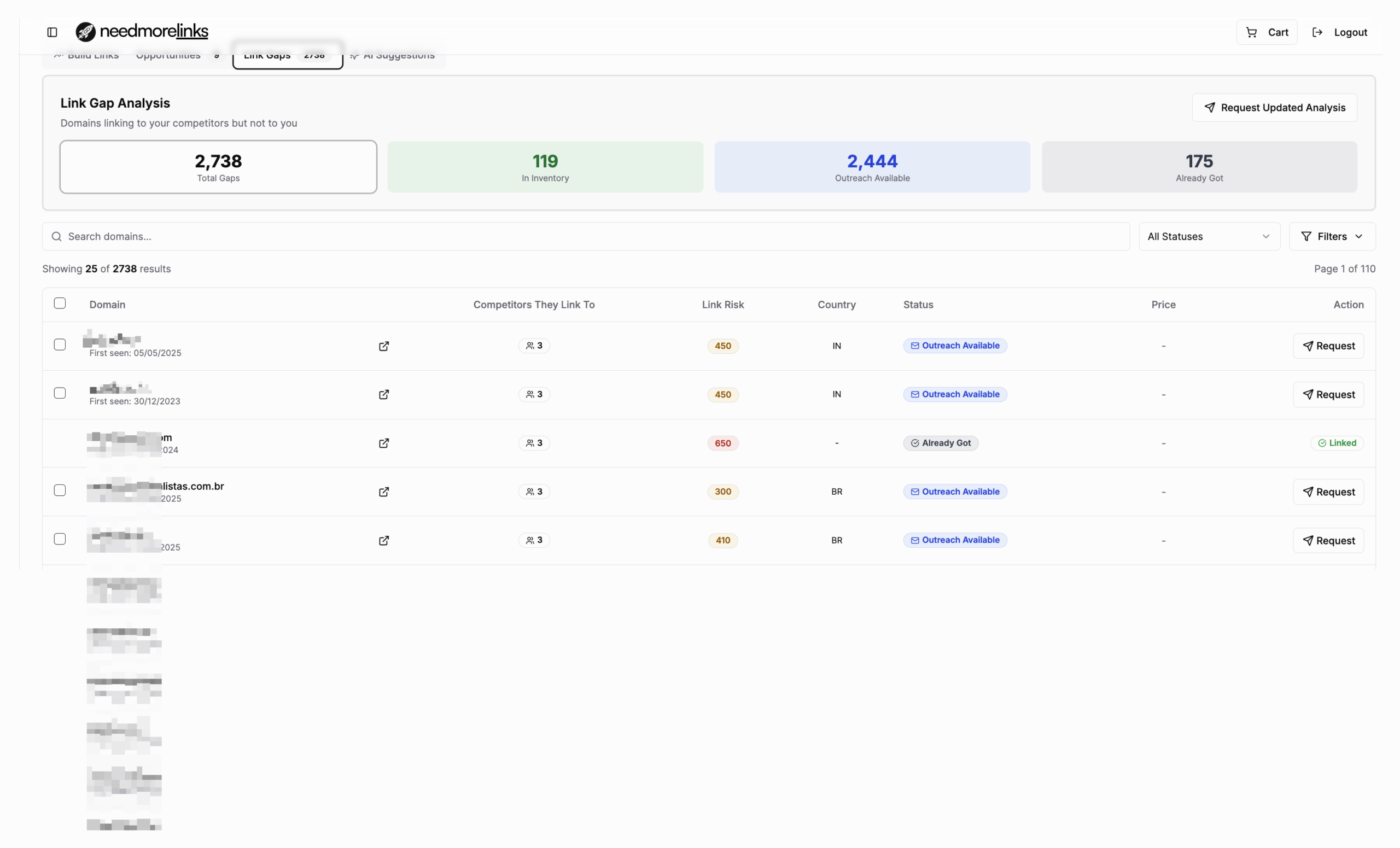
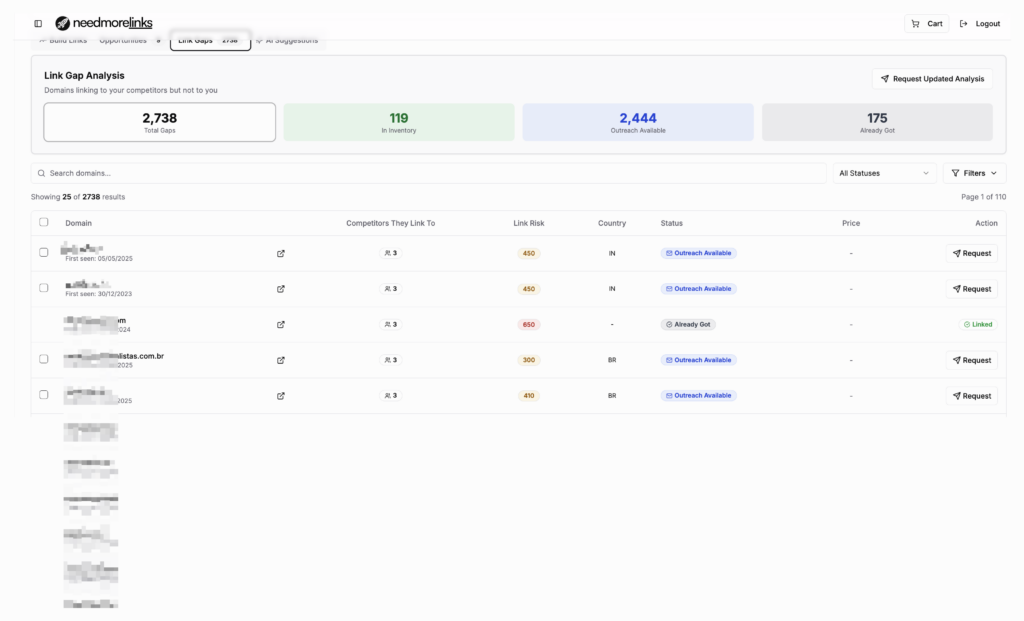
    When you add your clients into the Need More Links marketplace, our systems automatically run a gap analysis. We compare your client’s backlink profile against their competitors and surface the domains where your client is missing coverage.

    Many of those domains will already be available to buy through the marketplace. But some won’t be — and that’s where our outreach service comes in.

    If you see a domain in your gap analysis that isn’t currently available, you can request that we go and get it for you. Hit the button, and our systems take over. You don’t pay a penny for this. The outreach is completely free.

    What Happens Behind the Scenes

    Once you make a request, three things happen.

    First, we run a qualification trawl across the domains in your gap analysis. Not every site is worth chasing. Some are abandoned, some will never entertain a link placement, and some simply don’t respond to outreach. Our systems filter those out so we’re not wasting effort on dead ends.

    Next, for the domains that pass qualification, we use our proprietary technology to identify the right person to contact. Not a generic info@ address — the actual decision-maker. This is one of the things that sets our outreach apart. Getting in front of the right person dramatically increases the chance of a response.

    Then we reach out. A real email, to a real person, about a real opportunity.

    When We Hear Back

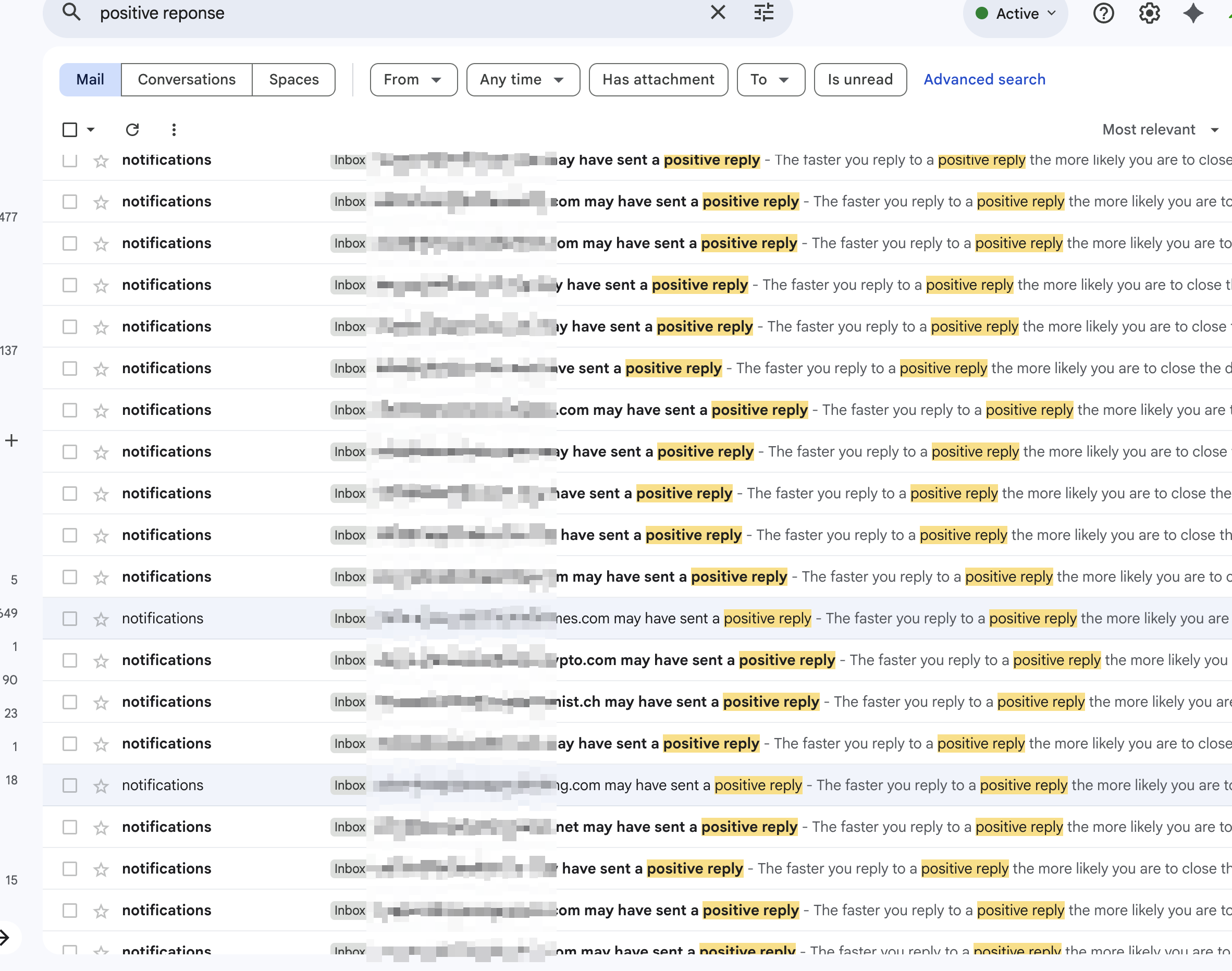
    If the site responds and a link placement is possible, we add the opportunity straight into your account and email you to let you know. No chasing, no back-and-forth on your end. You just log in, see the new opportunity sitting there, and decide whether you want to buy it.

    Why We Do This For Free

    We want the marketplace to grow. Every new site we bring in through outreach becomes available not just for you, but for every customer on the platform. You get the link opportunity you asked for, and the marketplace gets deeper inventory. Everyone wins.

    The Short Version

    You spot a gap. We go and fill it. You only pay if you decide to buy the link. The outreach costs you nothing.

    It’s that simple.